Friday, 26 February 2016

Adblock Plus opens up about how 'acceptable ads' work

Publishers with more than 10m blocked ads have to pay 30% of the revenue from previously blocked ads to make it on to whitelist
Adblock Plus’ ‘acceptable ads programme has drawn criticism from both users and publishers
Adblock Plus creator Eyeo has revealed crucial details behind the operation of the company’s controversial “acceptable ads” programme, which allows some advertisements through its adblocking software, often in exchange for a cut of the revenue received from the ads.In a blogpost, the company explained how it decides which publishers are asked to pay a fee to let their adverts through, and gave a partial explanation as to how that fee is calculated. Adblock Plus is the most popular desktop adblocking software, and its database is also used for many popular mobile adblocking apps (such as the iOS and Android app Crystal), which also integrate the acceptable ads program.

Trinity Mirror £5m ad campaign asks us to 'seize the New Day'

Newspaper launch on Monday will be preceded by extensive television, print and social media ads created by Quiet Storm


Trinity Mirror is to launch a £5m ad campaign to publicise its new newspaper the New Day, including a heavyweight TV push.The upbeat campaign, which uses the strapline “Seize the New Day”, includes a 30-second TV ad that will air in prime-time slots this weekend during Coronation Street, Ant and Dec’s Saturday Night Takeaway, England’s Six Nations rugby clash against Ireland and Sky’s Game of Thrones.“The launch campaign captures the spirit of how our reader feels – upbeat and positive, relishing life,” said Zoe Harris, group marketing director at Trinity Mirrorand publishing director for the New Day.The campaign has been created by ad agency Quiet Storm with media planning and buying by Vizeum.The New Day will launch with a print run of 2 million on Monday, when it will be available for free,and the price will then be set at 25p for two weeks before rising to 50p.

Sunday, 21 February 2016

Independent staff condemn closures as owner moves to keep big names

Scepticism over promise to improve website quality in transition to digital-only format as NUJ says 100 jobs are at

Copies of the Independent and i newspapers
Staff at the Independent have condemned the closure of its print titles and cast doubt on managers’ promise to improve the quality of the website as the company transfers to a digital-only format.
The National Union of Journalists (NUJ) said the move, which also includes the £25m sale of the i newspaper to Johnston Press, was likely to cost about 100 jobs.The Independent’s owners have moved fast to ensure that some of the papers’ biggest names – including Robert Fisk, Grace Dent and Patrick Cockburn – will continue to write for its digital-only operation.

Newspapers are still warhorses. But their owners are riding them to the grave

The death of the News Chronicle in 1960 was described as a tragedy, while other titles disappeared with little fuss. The Independent will be much missed – but today’s situation is confounding as much as it is tragic
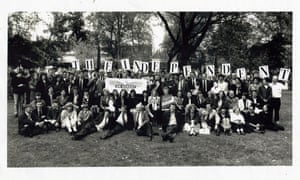
The Independent on Sunday staff outside their City Road offices in London
The News Chronicle published its last issue on 17 October 1960. To James Cameron it was “the biggest journalistic tragedy for many years … the most meaningful collapse the newspaper business has seen this generation”. The Chronicle had a fine radical tradition and loyal readers served by gifted writers, of whom Cameron was one. Its circulation wasn’t what it had been – neither, come to that, was its radicalism – but it was still selling more than 1.1m copies a day. If it couldn’t survive, Cameron wondered, then what newspaper could, “outside the great chain-stores of the trade?”

The Chronicle’s owners, the Cadbury family, who were Quakers, had sold it to one of those great chain stores, the Daily Mail, then as now owned by the Harmsworth family AKA the successive lords Rothermere. The contrast in political attitudes was stark: a paper known for its opposition to Franco, Hitler and Suez had vanished inside a paper that supported or appeased all of them. In his obituary of the Chronicle, Cameron wrote that “perhaps no other newspaper had a readership quite so faithful” even though in its closing days it had been “a potential warhorse ridden by grocers” (a phrase that stuck). Where would these readers go now? “The creeping block-ownership of the industry still leaves them some choice – but not much, and not for long.”

Sun website traffic up by more than 25%

News UK site soars in January after December dip, as most other national newspaper websites make double-digit gains
The Sun: website traffic was up more than a quarter in January
The Sun saw its web traffic soar by more than 25% in January, a welcome recovery after it lost audience in the previous month.Its website recorded a 5% month-on-month fall in average daily web browsers in December, despite dropping its paywall fully for the first time on 30 November. News UK chiefs brushed off the decline, blaming it on issues including “certain apps” being turned off in the transition to free access, and a seasonal lull in fantasy football game Dream Team. The Sun’s decline was the smallest in the market in December.Their confidence appears to have been well placed, with the Sun recording a 25.19% month-on-month boost in daily average browsers, according to the latest Audit Bureau of Circulations figures published on Thursday.

Credits roll on-air for the final time as BBC3 becomes online only

Channel aimed at younger audience, which launched 13 years ago, sees budget cut from £85m to £30m as it stops broadcasting on television
The Mighty Boosh, starring Julian Barratt and Noel Fielding, was one of the comedy shows which began life on BBC3.
In the early hours of Tuesday morning, as the credits for Gavin and Stacey rolled for one last time, the era of BBC3 as a traditional television channel came to an end.In a cost-saving move for the BBC, the channel, launched 13 years ago, becomes the first in the world to make the transition from TV broadcast to a solely online platform as BBC3’s budget is cut from £85m to £30m, with the savings ploughed into drama on BBC1.The channel was launched in 2003 and set out to create programmes that brought in younger audiences between the ages of 16 and 24, broadcasting to around 11m viewers each week. It was responsible for launching the careers of James Corden and Matthew Horne on Gavin and Stacey, David Walliams and Matt Lucas on Little Britain and Julia Davis on Nighty Night.

index identities

1) Reading the riots
2) Post-colonialism: Destiny Ekaragwa film analysis
3) Post-colonialism: theory and clip task
4) Feminism: post-feminism article and No More Page 3 research
5) Feminism: Feminist theory and Beyonce video analysis
6) Feminism: waves and feminism and online activism
7) Identity and Film - Media Factsheet task
8) Collective identity and the media

identities